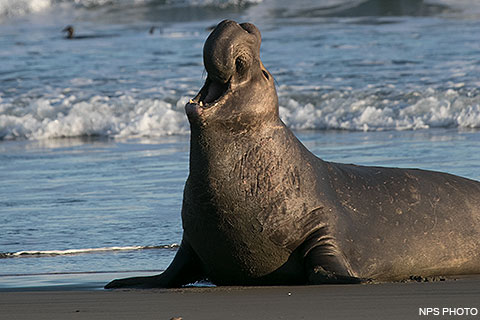
Elephant seal


There are two types of elephant seal found in the worlds oceans. The northern elephant seal is found in the Northern Hemisphere in the Pacific Ocean near to the coast of Mexico, Canada and the USA. The southern elephant seal is found in the southern hemisphere on the coast of Argentina, South Africa and New Zealand.

The elephant seal is the largest species of seal in the world with the average male elephant seal growing to around 5 m long. The female elephant seals are generally quite a bit smaller than the male elephant seals, and the female elephant seals therefore grow to around 3m.a very large seal with a long nose


Popular posts from this blog

Jackal

  The jackal is a medium sized member of the dog family, originally found in Africa, Asia and southeast Europe. There are four main species of jackal with these jackal species being the golden jackal, the side-striped jackal, the black-backed jackal and the Ethiopian wolf jackal. The golden jackal is the most northernly species of jackal and can be found as far east as Burma in Southeast Asia. Jackals are generally found in packs of roughly between 10 and 30 jackal individuals. Jackals use their large group numbers to their advantage and work together in a similar way to a wolf pack to both occasionally hunt for food but more so that the jackals can protect one another.

Horse

  A large animal with four legs, a mane (= long thick hair on its neck) and a tail. Horses are used for riding on, pulling carriages, etc.

Giant panda bear

 The Giant Panda is a species of bear that is found in the mountains of central and western China. One of the most famous and easily identifiable animals in the world, the Giant Panda is also one of the rarest and is under immense threat in its natural environment, primarily from habitat loss. The Giant Panda is unique among bears as they do not hibernate, have very small babies at birth and survive on a diet that is almost entirely vegetarian. Since the Giant Panda was first discovered by a French naturalist in 1869, it has become a global symbol for conservation with the World Wildlife Fund using it as their logo. The Chinese people also see the Giant Panda as a symbol of peace and numerous efforts have been made to try and protect the remaining populations in their native habitats.